
STARTUPS • SMALL BUSINESSES • EARLY-STAGE PRODUCTS
App & Website Development for Startups & Small Businesses
Practical app and website development for startups and small businesses that need to make sensible technical decisions before committing to a large build.
We help shape native app MVPs, professional websites, custom web systems and WordPress projects around the business outcome – with electronics and prototype hardware development available where the product needs a physical component. APIs and integrations remain available as supporting infrastructure where the software genuinely needs them.
Start with the smallest product that proves the business case
Smaller businesses rarely benefit from building every possible feature at the first attempt. The difficult part is deciding what must be real in version one, what can wait, and which assumptions should be tested before the budget is committed to production development.
We help turn a business problem or early product idea into a technical scope that can be explained, estimated and delivered in stages. In most cases that means a native mobile MVP, a professional website, a focused web application or a WordPress build. If the product also needs prototype electronics, PCB development, Bluetooth/Wi-Fi or an app-connected device, we can extend the same project into that hardware work. APIs and backend services are added where they are genuinely needed to connect the product.
The objective is not to make a small business behave like a large software department. It is to give you enough technical structure to make good decisions, launch something useful and understand what the next phase will cost and involve.
Common starting points
- A founder has an app idea but no technical specification yet
- An established small business wants to replace a manual or spreadsheet-based process
- A service business needs a professional website and maintainable content platform
- A startup needs an MVP to validate customer demand or support an early sales process
- A product concept needs prototype electronics, PCB development, Bluetooth/Wi-Fi or an app-connected device
- An existing app or website has outgrown its first implementation and needs a clearer technical direction
- A business needs an API or integration to connect systems that currently require repeated manual work
Development options for early-stage and smaller businesses
Native app MVPs
Focused iOS or Android products that concentrate on the core customer journey, account model and essential integrations before secondary features are added.
Web applications & operational tools
Customer portals, internal systems and workflow tools that remove repeated manual work where generic software no longer fits the business.
WordPress websites
Professional content-led websites built around standard Gutenberg editing so the business can continue publishing and improving the site without a page-builder dependency.
Electronics & prototype hardware
Prototype circuits and PCBs, electronics bring-up, sensors, Bluetooth/Wi-Fi and proof-of-concept hardware for products that need something physical to test alongside the app or website.
APIs & supporting integrations
APIs, backend services and third-party integrations where the app, website or hardware product needs shared data, accounts, external services or supporting operational workflows.
How we keep early-stage development proportionate
Define the business outcome first
We want to know what changes if the project succeeds: a manual process becomes faster, a customer can complete a new journey, a founder can demonstrate the product, or a physical prototype can prove a technical assumption.
Separate essential scope from future scope
Ideas accumulate features quickly. We distinguish the functionality necessary to validate or operate the first useful release from enhancements that are better informed by real customer behaviour later.
Prototype uncertainty where appropriate
If one technical assumption could force a major redesign, we would rather prove that path with a focused prototype than discover the problem after a large build.
Build for the next realistic stage
An MVP still needs enough engineering quality to be usable and maintainable, but it does not need infrastructure designed for a scale the business may never require. Architecture should match the next credible stage rather than an imaginary future organisation.
What we need from a startup or small-business client
You do not need to arrive with technical terminology or a complete specification. It is more useful to explain the customer or operational problem, what is known, what is still uncertain and what commercial constraints are real.
- A clear description of the problem or opportunity
- Who the users are and how they currently solve the problem
- Anything that already exists: designs, spreadsheets, prototypes, APIs or code
- The important integrations or devices involved
- A realistic indication of timing and budget constraints
- The decision the first phase needs to make possible
From there we can recommend discovery, prototype work, a staged MVP or a more conventional development project.
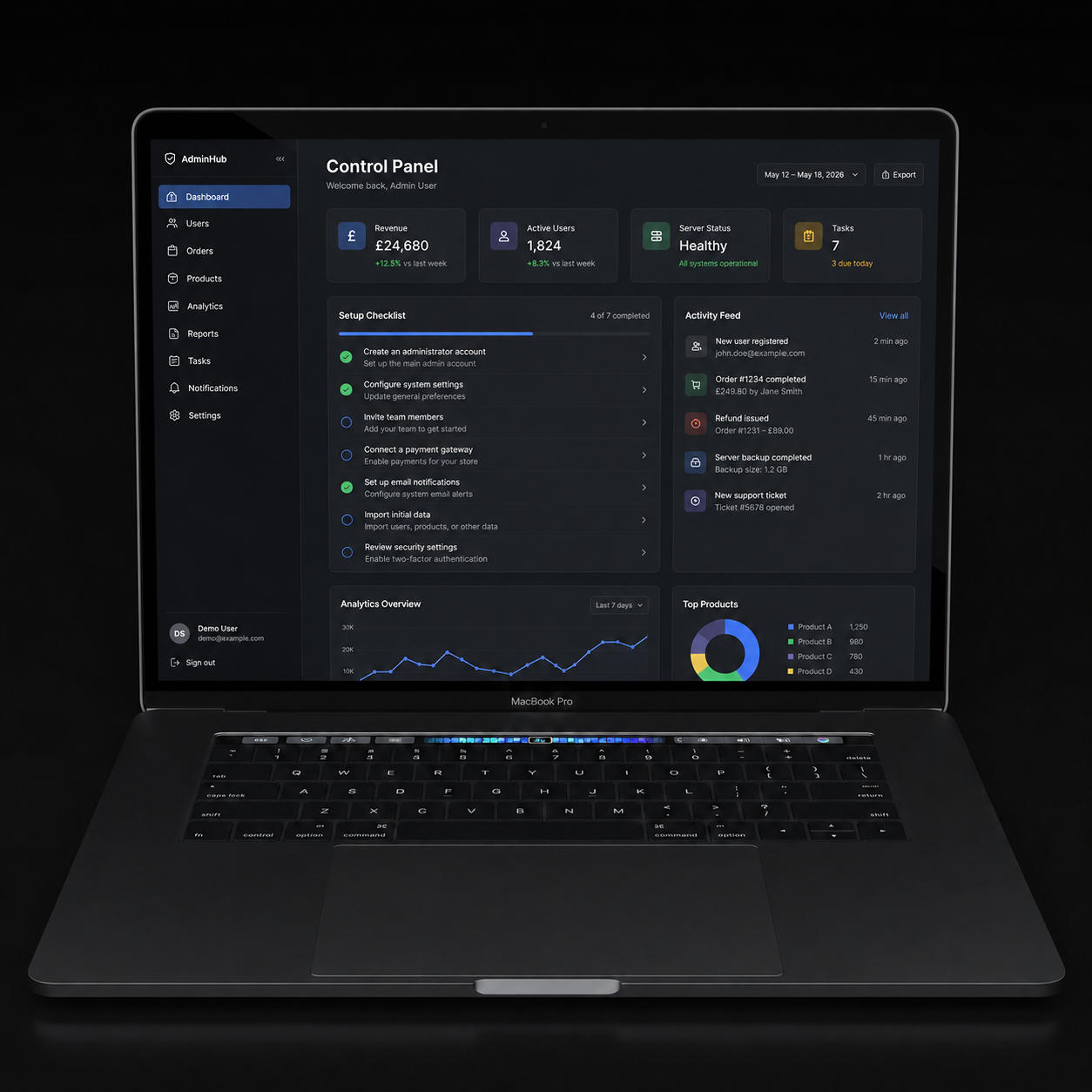
A small team can still make disciplined product decisions
Being a startup or small business does not mean accepting throwaway software. It means being deliberate about where quality matters now and where complexity can wait. Authentication, data ownership, backups, accessibility, failure handling and maintainability may be important from the first release even when advanced reporting, automation or secondary user roles are not.
We explain those trade-offs in practical terms so you can decide where the budget creates real product value.
Have an idea, a business problem or an early product that needs a clearer next step?
Tell us what you are trying to achieve and what stage you are at. We can help work out whether the sensible next move is discovery, a prototype, an MVP, a website or a focused integration project.